
Welcome to Evolving Souls
I have created this website to promote the exploration of consciousness, self-discovery and spiritual growth, and encourage their integration into the public arena. I am not trying to convince anyone of anything; I am merely presenting the information to anyone who wishes to read it.
My understanding of reality is continually evolving, so please don’t assume that anything I have written is the “finished article” – it is merely my understanding at the time it was written. I hold my beliefs lightly, so they can adapt and evolve as new information comes along, and I encourage you to do the same.
I want to help people from all walks of life to open their minds to a new way of thinking, and open their hearts to a new way of being. This can be achieved simply by shifting our awareness to a deeper place, delving beneath the familiar surface of ourself and our reality, and exploring the possibilities that lie beyond.
This website is for evolving souls, like you, who are interested in exploring the deeper side of life, including the nature of reality, personal development, psychology and spirituality (without any new-age or religious connotations). Evolving Souls is a trusted source of information that explains some astonishing truths about the nature of reality and how everything is more intimately connected than you might imagine.

An Overview of Evolving Souls:
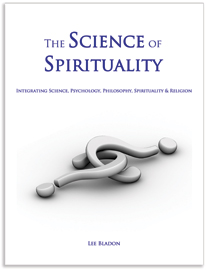
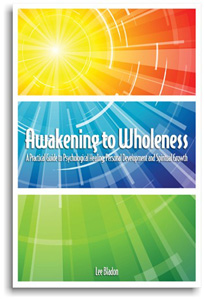
- I am the author of two fascinating books, The Science of Spirituality and Awakening to Wholeness, which have changed the lives of people all around the world. Large sections of each book are available to read for FREE on this website, so you can try before you buy.
- The Evolving Souls Blog contains a selection of interesting and informative yet easy-reading articles. The metaphysics articles reveal some astounding truths about the fundamental nature of reality and are “must reads” for anyone who is interested in physics or consciousness. The self-discovery articles provide a range of self-help tools for personal development, emotional healing, psychological wellbeing, spiritual growth and discovering your true nature. They will help to open your heart and mind, and actively engage in evolving your soul.
- The website also includes concise yet detailed information about the enneagram, which is an incredibly useful system of nine archetypal personality types. It combines traditional wisdom and modern psychology into a comprehensive, powerful and versatile system for understanding yourself and others. I have developed a simple system to help you to discover your enneagram type and uncover your core beliefs, emotional reactions and typical coping strategies.
The Science of Spirituality
A ground-breaking book that integrates science, psychology, philosophy, spirituality and religion into a unified system that describes the multi-dimensional nature of man and the universe. It explains the science behind some religious, spiritual and new-age belief systems, and sheds light on some common misconceptions. Please click on the book image for further details…


Awakening To Wholeness
A practical guidebook for psychological healing, personal development & spiritual growth. It describes a two-fold path of awakening that combines psychological and spiritual development. Psychology is concerned with the personal aspects of our being (i.e. mind, emotions and ego), and spirituality is concerned with the trans-personal aspects of our being (i.e. soul & true-Self).
The Latest Articles…

Introduction to Focusing
Focusing is a body-oriented process of self-discovery, which begins with simply noticing how we feel in our body and getting a “felt sense” of our present-moment experience. Getting a “felt sense” is the key element of focusing, because gives rise to deeper insights than thinking alone can provide.

Self Inquiry
Self inquiry is a relaxing and sinking of awareness through deeper and deeper layers of ourself until we arrive at our essential being or true nature. It takes us beyond what we already know, to discover new aspects of ourself and reality that are beyond our imagination.

Healing the Soul
Our soul has an in-built coping mechanism to repress the overwhelm, so that we can carry on with our lives. A piece of our soul withdraws from the distressing experience, carrying the distress away to a place deep within us (or in extreme circumstances, outside of our body) where it can no longer overwhelm us.

Feel It to Heal It
If we don’t consciously and fully experience our physical, emotional and mental responses to life (as they occur in the present moment), our resistance causes them to become stuck, until such time as we are willing to consciously and fully experience them.

Conscious Living (in the now)
The soul is like a seedling – it requires conscious engagement with Life to grow and to blossom, but most people’s relationships with Life are semi-conscious. If we don’t consciously engage with Life we will make very little progress and remain passive victims of Life’s circumstances.
Conscious Awareness (Mindfulness)
Conscious awareness is commonly referred to as mindfulness, but it isn’t primarily about the Mind – it is about Awareness. Our soul’s awareness of the mind, heart and body. It gives us the power to notice our thoughts, emotions and behaviours without identifying with them or defining ourselves by them.

The Inner Search
We have to discover “who we are not” before we can truly discover “who we are”. We have to exhaust all the external avenues for finding peace, happiness and contentment before we seriously consider looking within. In the end, it is usually our yearning to be free from suffering that prompts us to embark on the inner search.

Happiness (part 2)
Our authentic happiness is blocked by our (false) belief that life is not how it should be; i.e. how we want it to be. This unfulfilled false belief gives rise to negative emotions – the negative emotions make us feel uncomfortable – the ego equates the discomfort with unhappiness – so the ego tries to alleviate the discomfort by seeking happiness elsewhere.

Happiness (part 1)
The one thing that we are all seeking in life is happiness. We might say that we are seeking fame, fortune, success, sex, excitement, adventure or spirituality, but all of these things are just strategies to find lasting happiness. None of these things actually make us happy; it is the value we put on them that makes us feel happy or not.